
Sapling issue #854
The one in which we talk to Ross Turner of Superlative, The Literary Journal.

Hi writers.
It’s National Black Bookstore Day (NBBD) — today, April 7! Readers can support this annual holiday established to “recognize, elevate, and drive support to Black-owned bookstores across the United States” in several key ways. From the website:
Visit and purchase from a Black-owned bookstore (in-store or online)
Share and amplify using #NationalBlackBookstoreDay and #NAB2
Encourage your networks and communities to participate
And mark your calendars: Independent Bookstore Day is coming up soon, on April 25.
Finally, in AI news, Hachette Book Group has cancelled Mia Ballard’s previously self-published horror novel Shy Girl for suspicions of AI use in the generation of the text. The author maintains “that her writing was original, but that a friend editing the book had, unbeknownst to her, employed generative AI.” Hmm.
Now, here’s what’s happening in the small press world this week.
—Kit
Managing Editor / Sapling editor
Black Lawrence Press
Contest: Waterston Desert Writing Prize

Genre(s): Nonfiction
Award: $3,000 cash award, residency at PLAYA in Summer Lake, Oregon, and a reading and reception at the High Desert Museum in September 2026.
Entry Fee: N/A
Deadline: May 1, 2026
Guidelines: highdesertmuseum.org/waterston-prize/ and thewaterstondesertwritingprize.submittable.com/submit
Journal: Acentos Review

Genre(s): art, poetry, fiction, nonfiction, translation and cross-genre writing by Latinx artists
Website: acentosreview.com
Guidelines: acentosreview.com/submission-guidelines.html
Open to submissions year-round. There is a May 1, 2026 deadline for the June 30 publication date.
Small Press: BOA Editions

Genre(s): poetry, poetry-in-translation, and short fiction
Website: www.boaeditions.org
Guidelines: www.boaeditions.org/pages/boa-short-fiction-prize and www.boaeditions.org/pages/american-poets-continuum-series
The Short Fiction Prize is open to submissions April 1 - May 31, 2026, and the American Poets Continuum Series is open to submissions April 1 - April 30, 2026.
Feature: Superlative, The Literary Journal
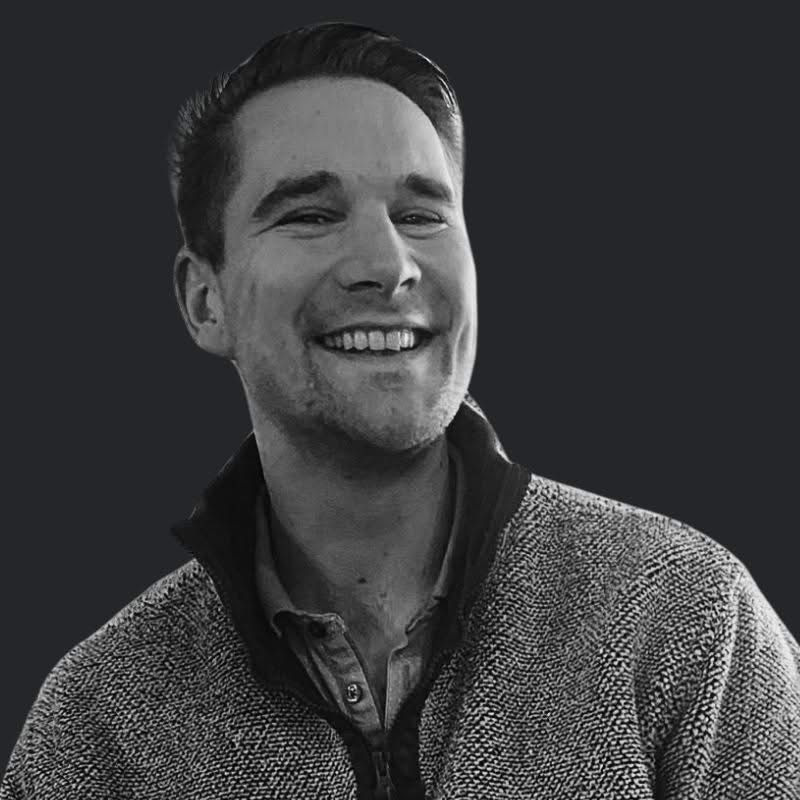
This week, Sapling spoke with Ross Turner, Founder & Editor-in-Chief of Superlative, The Literary Journal.
SAPLING: Superlative, The Literary Journal, publishes “quality, innovative work by emerging short story writers and poets, in order to promote new, developing authors and the art of the short story and poetry to readers worldwide.” For those new to Superlative, what are two or three key things you’d like writers to know?
ROSS TURNER: We’d like writers to know that even though this world of literary writing and submitting and publishing can sometimes be daunting, even isolating, with submissions either receiving no reply, or AI-generated replies, a member of our team responds personally to every single submission. We think this is vital because this whole process, from new writers improving their skills, all the way through to publication, should be a personal, enjoyable process. A real honour of our job is being able to read writers’ words, and to be trusted with their stories, voices, and visions – to connect with so many writers from all over the world is a real privilege that we do not take lightly.
Off the back of our previous point, we’d also like writers to know that we take great pride in literary loyalty: we endeavour to give our authors the best possible experience, promote them as widely and fully as we are able, and offer feedback wherever possible at no extra cost.
And finally, most journals and magazines ask writers to read previous issues before they submit, to get a feel for the kinds of pieces they publish, so that they stand the best chance of being accepted. We ask the same, but would like writers to know that whilst they can purchase print copies of our journal (and we would be very grateful if they did) everything we publish is available to read for free online!
SAPLING: Can you tell us a bit about the decision to publish both in print and online?
R. T.: Originally, back in 2020 when we first established Superlative, we only published work in print—as many writers can probably relate to, it feels amazing to hold a physical ‘thing’ containing your writing. To display it proudly on your bookshelves alongside other reads. To be able to ‘gift’ your stories and poetry to friends and family. We still print our annual journal, because we think it is important to have tangible evidence of your efforts.
However, come 2025, we decided to also publish online, for a variety of reasons. Offering our readers a hybrid journal makes Superlative much more accessible—it can be read anywhere, on any device, saving printing and delivery fees, and the planet. Because we are an international journal, and accept worldwide submissions, a large percentage of our readers and writers are not from the UK, so we really wanted to give them every opportunity to make the most of what we have to offer. Publishing online allows us to publish more writers, more frequently, which can only be a good thing!
SAPLING: Have you encountered any noteworthy challenges since the journal’s founding in 2020? Anything you wish more writers would know from your side of the desk?
R. T.: In 2020, when Superlative was founded, it was operated entirely by Ross—editor, promoter, illustrator, social media manager, Ross of all trades. And this was alongside postgraduate studies, working part-time in the Royal Air Force Reserves, and as a full-time English tutor. As you can probably imagine, this was a lot!
As Superlative has grown, we have taken on new staff—we now have 4 editors, internship editors, plus a dedicated illustrator and marketing executive. This is fantastic, but the challenge remains the same—almost all of our staff run Superlative alongside full-time work and/or study. As of 2026, Hannah, our marketing executive, is now our first and only full-time member of staff—we hope to make all our staff members full-time in the future, but have proritised Hannah to ensure Superlative keeps growing.
If anything, we want to ensure that writers know we run Superlative because we believe in it, because we think it makes a difference, and because we are passionate about their work.
SAPLING: Where do you imagine Superlative to be headed over the next couple years? Anything new or noteworthy on the horizon?
R. T.: We have lots of plans for Superlative, and are always thinking about how we can make it better for our readers and writers. This consists of many things: bigger prize pots, more publishing opportunities, recorded author Conversations and podcasts, anything we think is worthwhile.
Overall, our main goal is to publish, and continue to support, new and emerging writers in the community, promoting them as widely as we are able. In 2026, this means publishing not just writers’ individual poems, but also poetry pamphlets; we have our first pamphlet set to be released this summer. Beyond 2026, we aim to become an indie press that publishes novels, but we will always remain faithful to our journal as the backbone of who we are.
SAPLING: What is the first thing that you look for in a submission? Any deal breakers?
R. T.: We are always looking for meaningful work, that discusses big topics by saying little things. We encourage transgressive and experimental work, but a deal breaker might be something shocking and taboo just for the sake of it—it always needs to be for a reason. Additionally, we would encourage submitters to pay close attention to specific details, and think carefully about interesting and meaningful character development. Also, avoid clichéd or even just overused phrases and descriptions wherever possible, and try to home in on a specific scene or scenario or situation that, through a small moment/set of moments, illuminates some kind of greater truth for the reader, without being too on the nose. I know, we aren’t asking for much!
SAPLING: What one or two literary magazines deserve more recognition, and why should more people be reading them (and perhaps seeking a home for their own writing there)?
R. T.: Hare’s Paw Literary Journal is run by Olivia Thomes, who is the Farmer & Operator of her own Farm, Micro-Bakery, and Apothecary: Hare’s Paw Farm. She runs the journal by herself—design, publications, marketing, and submission management.
We love everything about Hare’s Paw—both in a literary sense, but also holistically—and definitely think they deserve more recognition. If we may quote from the Hare’s Paw mission statement, they publish, ‘authentic, strange, soulful, and even joyful work that allows all voices to be heard. If you’ve ever had a hard time placing your work, consider Hare’s Paw Literary Journal your home.’ We absolutely buy into this.
SAPLING: Just for fun (because we like fun), if Superlative was throwing a dance party, what would be on the playlist?
R. T.: What an excellent question.
Let’s Groove – Earth, Wind & Fire, and Daddy Cool – Boney M. (from Hannah)
All George Ezra (from Ross and Hannah)
Anything by Pitbull – dance floor genius some might say (from Holly)
Any Jordan Davis (from Ross)
Pulse by The Mad Capsule Markets (from Dan)
What a night.
Ross Turner works as a creative and critical writer, editor, and private tutor, and is the founder and editor-in-chief of Superlative - The Literary Journal. He is currently completing his practice-led creative writing PhD at York St John University, with a focus on short story cycles. Previously, he attended the University of Gloucestershire, attaining his BA (Hons) and MA in Creative and Critical Writing, for which he received several awards and a bursary. Aside from reading and writing, Ross enjoys CrossFit, rock climbing, snowboarding, board games, and is an on-call firefighter.
Give the gift of Sapling.
Would a writer in your life enjoy a gift subscription? You can send one for either $5/month or $50/year. All you’ll need is the gift recipient’s email.
It was lovely talking with you, Kit. Thank you for featuring us! 💚