

Sapling issue # 841
The one in which we talk to emerging author Austin Araujo.

Hi writers.
It’s 2026, a new year, and maybe, possibly, the start of a better one than the one we’ve left behind. We can, at least, hope. To kick things off this January, I wanted to share this meditation on overfunctioning and rest from writer Benjamin Schaefer over on Electric Lit. It’s a read I think many of us writers might benefit from during this season of goal-making and resolve (finish the draft! submit! start something new!). Because as I have to remind myself often, rest is important if I’m going to get absolutely anything done.
Now, here’s what’s happening in the small press world this week.
—Kit
Managing Editor / Sapling editor
Black Lawrence Press
Contest: Arc Poetry Poem of the Year

Genre(s): poetry
Award: $5,000 for the winning poem, $500 for the poem selected as Honourable Mention, and $250 for the Readers’ Choice selection.
In addition, all 10 to 12 shortlisted poems receive paid publication in Arc and online.
Entry Fee: $40 for 1-2 poems; 45 for 3 poems
See guidelines for full fee description.
Deadline: February 1, 2026
Guidelines: arcpoetry.ca/contest/poem-of-the-year
Journal: Fourth Genre

Genre(s): essays (CNF)
Website: fourthgenre.org
Guidelines: fourthgenre.org/submit
Fourth Genre is accepting submissions for two contests running Jan 1 - April 15, 2026: Steinberg Memorial Essay Contest and Multimedia Essay Contest.
Small Press: Sarabande Books

Genre(s): poetry, fiction, literary nonfiction, and literature in translation
Website: sarabandebooks.org
Guidelines: sarabandebooks.org/submissions
Sarabande is open January 1 - February 15, 2026 for 3 annual prizes: Kathryn Morton Prize in Poetry, Mary McCarthy Prize in Short Fiction, Sarabande Prize in the Essay.
Feature: Sapling’s Five Burning Questions for Emerging Writers: Austin Araujo
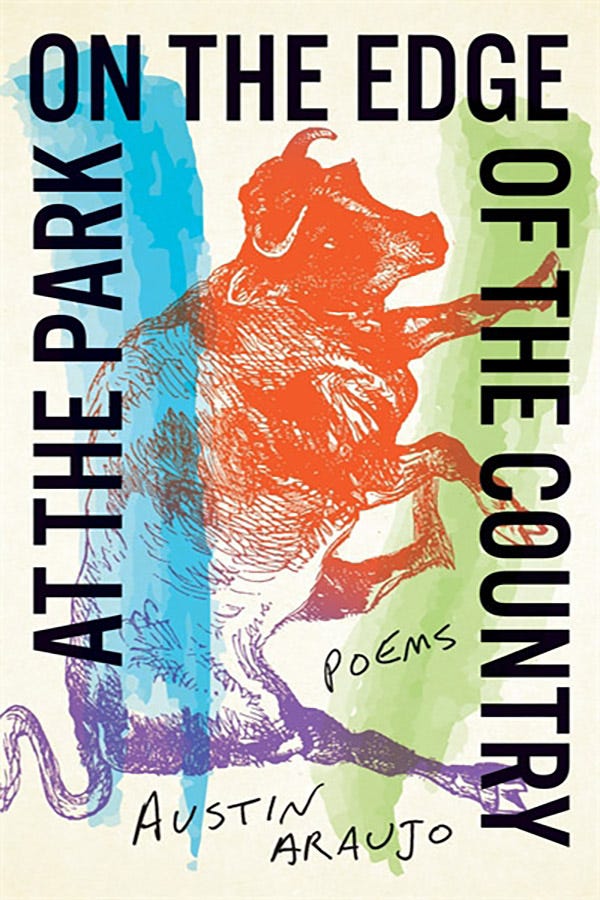
This week, Sapling spoke with Austin Araujo, author of the debut poetry collection At the Park on the Edge of the Country (Mad Creek Books, February 24, 2025).
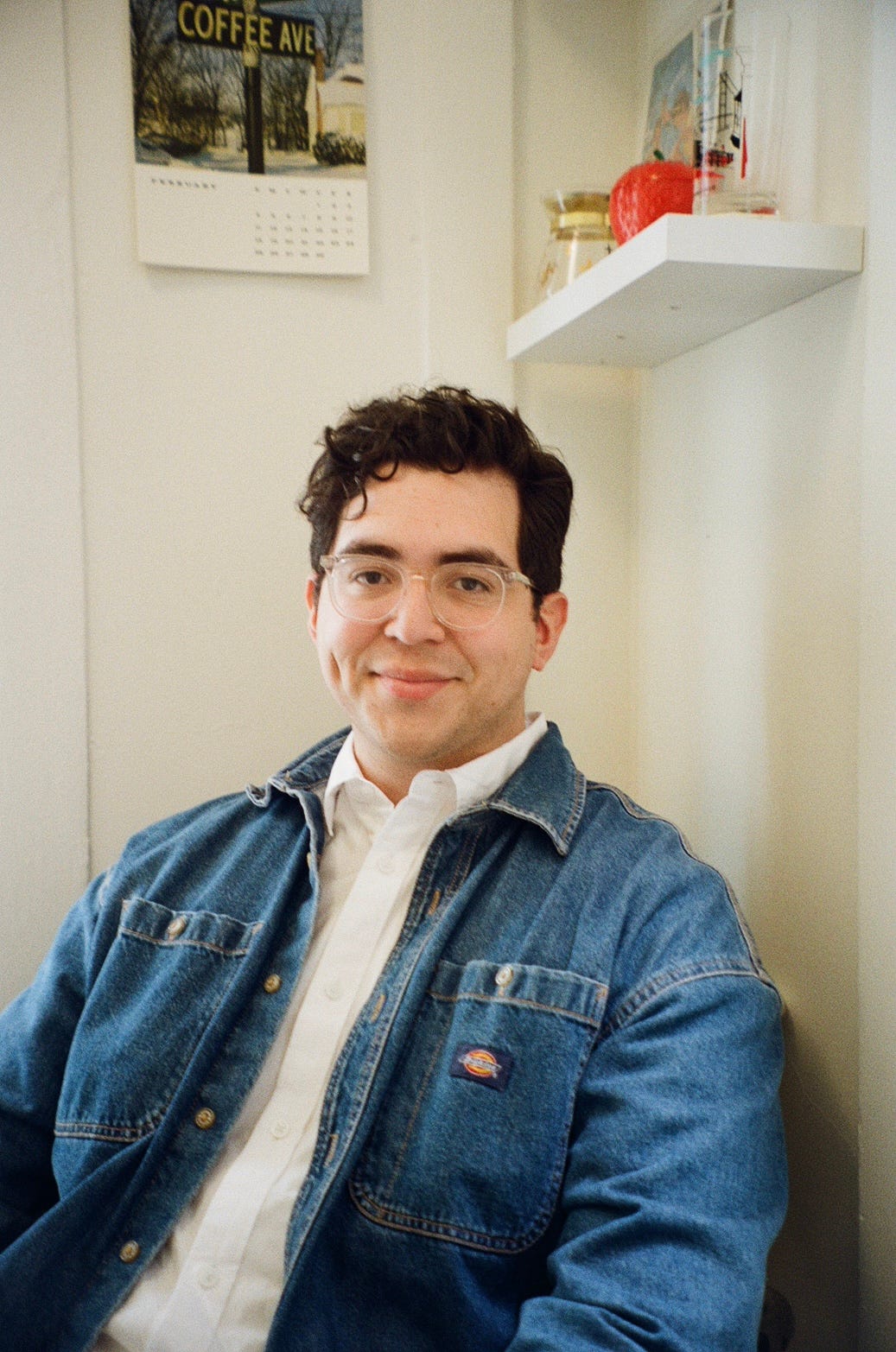
SAPLING: Tell us about the process of getting your debut collection, At the Park on the Edge of the Country, out in the world. Did you enter contests? Open reading periods? What transpired between sending the manuscript out initially and its acceptance at Mad Creek Books?
AUSTIN ARAUJO: I began submitting the manuscript that would become the book for the first time in the fall of 2021. That year, I submitted to just one contest. That submission was a trial run, an arbitrary deadline to push me to polish my master’s thesis—a clumsy move, I see in retrospect, since that version of the book had yet to find its most important language. The next year, I kept adding to and revising the book and submitted it to a few more contests and open reading periods. Among those submissions, I got some positive feedback from a few publishers, which helped me figure out that the book warranted a rearrangement of its structure. In 2023, I submitted the book widely, and that’s when it won The Journal book prize.
SAPLING: What was your experience with the editing of your manuscript after its acceptance? Did you have an opportunity to make revisions, either at your own suggestion or at the suggestion of your editor? How involved were you in the design aspects of the book’s production (cover image, interior design, and so on)?
A. A.: I had a few weeks after the manuscript was accepted to make final additions to the book, which gave me the chance to include a couple last poems that I now see as key to the project. Acceptance gave me a real deadline to stop tinkering with the poems that I considered done and, crucially, was a signal to stop writing new ones.
Friends who’d published their first books through contests had given me the heads up that the turnaround could be quick, so I knew that I would be in charge of most of the editing or shaping of the book. Any edits to poems suggested by the publisher came during copyedits, which I found to be among the most satisfying phases of the book’s production.
One important aspect of the book that the publisher did help me change was the title. I’d submitted the manuscript under a title that was abstract or aspirational. Then, in an email to Kristen Rowley, my editor at Mad Creek Books, I mentioned that I was thinking about changing it to what it would eventually be published under. Her enthusiasm about the switch helped to concretize for me what the book is really about.
The production of the cover began with some initial fielding from the publisher about whether it should take its cue from the book’s title, from a poem, or something else. It was important to me that the cover be figurative rather than literal—using the bull came from that idea. As well, the length of the title pushed us to be creative with the space the text could take up on the cover. With these ideas in mind, the publisher and designer Brad Norr did the rest of the (lovely) work.
SAPLING: Did you publish a number of poems in literary journals or other periodicals before the publication of the finished book? Did this seem like a necessary part of the process for this particular project?
A. A.: I published about two-thirds of the poems in magazines before collecting them in the book. It’s true that this seemed necessary. When I was just starting to write, I saw how many of the poets I admired had what looked like endless acknowledgements in the backs of their books to thank the editors and publishers who’d given those poems space previously. It’s a well-worn piece of advice that came my way during grad school: submit to the journals who publish your favorite poets.
In the end, I didn’t include all the poems I published in magazines in the book. Maybe it’s obvious to others, but I came late to the fact that some poems, even if they’re strong, interesting, and published, can subtract from or make redundant the aims of a collection.
SAPLING: In what ways have you been involved in the publicity and promotion for At the Park on the Edge of the Country? In what ways has the publisher contributed to marketing and publicity efforts?
A. A.: The folks at Mad Creek Books, especially Samara Rafert, have been so great at getting the book in front of people. The publisher facilitated sending ARCs to potential reviewers, proposed media outlets feature excerpts from the book to coincide with its release, and fielded interview requests for me, among I’m sure many other tasks I haven’t even heard about. I would have been grateful if they’d just published the book and called it a day, so the extra work has been a happy surprise that I try to make good on by promoting the book myself.
On my end, I prioritize participating in readings, classroom visits, and interviews. I especially like getting to read from the book in support of a friend’s own book release. When my book was published in February, I also made sure to share my own ARCs and final copies with friends and teachers. It’s helpful when sharing news of one’s book can also serve as an expression of gratitude.
SAPLING: What surprised you about the process of having your book published? Is there anything you wish you’d known beforehand about putting a first book out into the world and/or publishing with a small press?
A. A.: If I could go back, I’d tell myself not to underestimate the skills of the small press, or, in my case, the university press. In the weeks ahead of the book’s release, I was so determined not to overinflate my expectations around publication that I discounted the work that was possible, within reach. I just wanted to bypass any hopes for publication’s effect on my sense of myself as a writer or the book’s ability to catch the poetry world’s attention. But while it’s useful to modulate one’s hopes around publishing a book, it can be too tempting to resort to the doom and gloom of thinking no one cares about this but me and the publisher. If I could go back, I’d say don’t worry about that, there’s work to do!
I’ve also been surprised by how fun it is to talk about the book and its aims. It’s like I’m just now learning what it’s about, how the poems work.
SAPLING: Bonus number six—I see on your website that you’re currently pursuing an MFA in nonfiction writing from the University of Iowa. What’s up next for you creatively?
A. A.: I’m working on a few different projects—it’s a tip I learned from teachers: have a project you can turn to once you have a book accepted, so you still have language to work on. One of my in-progress projects is a book-length essay on my relationship to Prince’s music and bodily shame. Another is a prose narrative about identity, immigration, and illness that bends between fiction and nonfiction. I’ve also begun writing new poems, but they’re so fresh that I’m not quite sure what they want to do or say.
SAPLING: Austin, thank you so much for taking us along on your road to publication!
Austin Araujo is the author of At the Park on the Edge of the Country, winner of the 2023 The Journal Charles B. Wheeler Poetry Prize. He is the recipient of a Wallace Stegner Fellowship from Stanford University and his poems have recently appeared in Poetry, Cleveland Review of Books, and Bennington Review. He is currently a student in the Nonfiction Writing Program at the University of Iowa.
Give the gift of Sapling.
Would a writer in your life enjoy a gift subscription? You can send one for either $5/month or $50/year. All you’ll need is the gift recipient’s email.