

Sapling issue # 828
The one in which we talk to emerging author Maggie Cooper.

Hi writers.
In a recent piece of flash on Electric Lit, Comedy Central’s Pardis Parker makes a case for how “The NY Times Connections Destroyed Society and We’re Fine With It,” and Lit Hub shares Brittany Allen’s “Literary takeaways from the 2025 film festival circuit.”
Now, here’s what’s happening in the small press world this week.
—Kit
Managing Editor / Sapling editor
Black Lawrence Press
Contest: Saints & Sinners Poetry Contest / Saints & Sinners Short Fiction Contest

Genre(s): poetry and short fiction
Award: $500
Entry Fee: $20
Deadline: October 15, 2025
Guidelines: sasfest.org/#contests
Open to LGBTQ+ writers
Journal: earworms magazine

Genre(s): fiction, poetry, creative nonfiction, flash, experimental, photography
Format: digital
Website: earwormsmag.wixsite.com/earwormsmag
Guidelines: earwormsmag.wixsite.com/earwormsmag/submission-guidelines
Open through November 5, 2025
Small Press: Perugia Press

Genre(s): poetry
Website: perugiapress.org
Guidelines: perugiapress.org/contest
The Perugia Press Prize is open to submissions from poets who are women, inclusive of gender-expansive identities, Aug 1 - Nov 15, 2025.
Feature: Sapling’s Five Burning Questions for Emerging Writers: Maggie Cooper
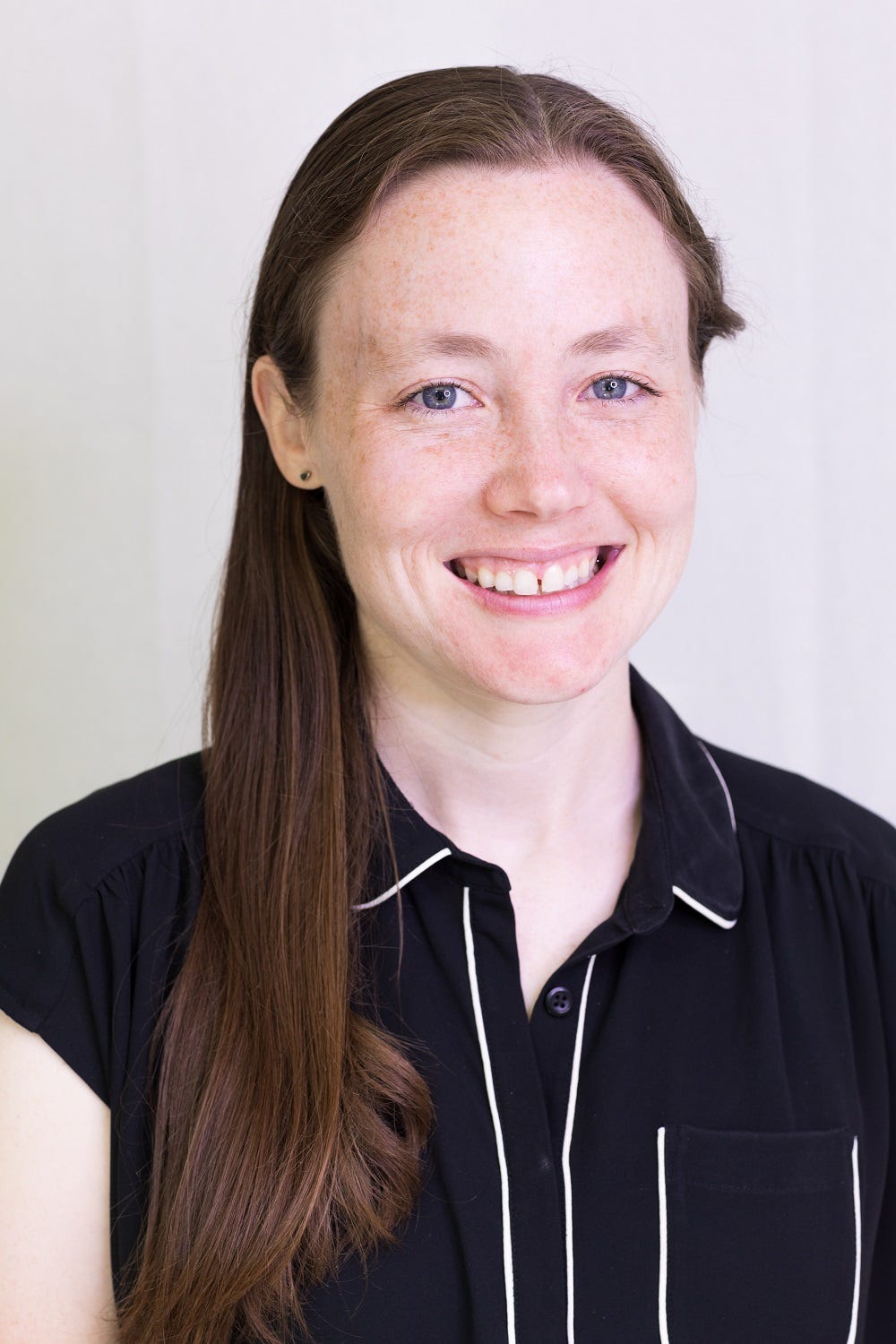
This week, Sapling spoke with Maggie Cooper, author of the chapbook The Theme Park of Women’s Bodies (September 17, 2024, Bull City Press).
SAPLING: Tell us about the process of getting your debut chapbook, The Theme Park of Women’s Bodies, out in the world. Did you enter both contests and open reading periods? What transpired between sending the manuscript out initially and its acceptances at Bull City Press?
MAGGIE COOPER: After some forensic exploring in my Google Drive, it would appear that I started my list of prose chapbook publishers in June of 2020, but the first submission I actually made was not until December of 2021. From then through the spring of 2022, I sent the manuscript out to more or less everywhere that (1) was open and (2) seemed to be publishing the kinds of books I wanted my stories to sit alongside. In reality, that ended up being only about a half-dozen contests. The fact that many presses that publish chapbooks are focused primarily or exclusively on poetry made the process both easier and harder—having fewer places to submit simplified things, but of course, it also meant I often came across calls that my book didn’t quite fit. I have seen some great new series popping up, such that I think this may have shifted even in the last couple of years, but that was my experience.
I submitted to Bull City Press in April of 2022 and in August, I got a call from Ross White, one of Bull City’s editors, saying that they wanted to publish the collection. I was familiar with Bull City because I had gone to graduate school in North Carolina, where the press is based, and had published a story in their literary magazine, Inch. I also had a poet friend who had published a chapbook with them, so after I talked to him and confirmed he was happy with his experience, I enthusiastically accepted Ross’s offer.
SAPLING: What was your experience with the editing of your manuscript after its acceptance? Did you have an opportunity to make revisions, either at your own suggestion or at the suggestion of your editor? How involved were you in the design aspects of the book’s production (cover image, interior design, and so on)?
M. C.: One thing I loved about working with Bull City is how fulsome the editorial process was—I got notes from Ross White and a really sharp copyedit from Alana Dunn that helped me to polish the stories and think about how they worked together. I also enlisted three of my most trusted writer friends to review the manuscript as I was making the final edits and found their suggestions to be extremely helpful.
Another special thing about Bull City is that Ross is a professor in the English department and UNC Chapel Hill, and a few lucky authors get to have their books be case studies for Ross’s undergraduate publishing class. This meant that, during the fall semester of 2022, I got a handful of really thoughtful editorial letters about the collection written by Ross’s students, as well as a whole folder of cover designs they put together for the book. I didn’t take every note, of course, but this felt like a really special part of the process—and I was particularly amazed when, two years later, one member of the class showed up at one of my readings in a completely different state.
One thing that changed as a direct result of all this editorial feedback was the way the book was organized—originally, I had three sections named after pairings from the Meredith Brooks’ song “Bitch” (Bitch/Lover, Child/Mother, Sinner/Saint), which I thought was brilliant and clever. But most of the Gen Z students in Ross’s class had never even heard of the song, which inspired me to reconsider, at which point my friend and fellow fiction writer Jessie Van Rheenen helped me retitle the sections in a way that I think better reflects the content and tone of the stories.
In terms of design: I got to see, consult on, and approve both the interior design and the jacket, which I think is exactly what all authors should experience! Ross is an amazing designer in addition to being an editor (and a poet himself!), and he patiently went through quite a few cover options with me before settling on the final version. We didn’t end up using any of the students’ designs, but it was definitely illuminating to see how they were thinking about imagery for the book, and seeing their mock-ups helped us zero in on a direction.
SAPLING: Did you publish any stories in literary journals or other periodicals before the publication of the finished chapbook? Did this seem like a necessary part of the process for this particular project?
M. C.: Eight of the nine stories in the chapbook were published before the chapbook came out—in spite of my best efforts, the last one, my lady pirate story, was never picked up! For me, this was crucial in all kinds of ways, not in the least because it allowed me to benefit from the editorial input of some very smart editors, who pushed me to expand and refine the stories before I even realized I was writing a chapbook. The last story in the book, “The Convent” was written after Karissa Chen, who was at the time the fiction editor at The Rumpus, accepted a duo of flash stories I had submitted and suggested I write a third to make it a triptych—that is now one of my favorite stories that I have ever written, but I don’t know that I would have come up with it if she hadn’t prompted me to fill that gap.
My feeling is that while publishing in literary magazines isn’t always necessary in order to get a book published, it often doesn’t hurt—and it can be a really valuable way of being involved in the literary community, getting feedback from editors, connecting to other writers, and practicing putting your work into the world.
SAPLING: In what ways have you been involved in the publicity and promotion of The Theme Park of Women’s Bodies? In what ways has the publisher contributed to marketing and publicity efforts?
M. C.: Another perk of publishing with Bull City Press is that they work with Cassie Mannes Murray, the founder of Pine State Publicity. According to the handy spreadsheet she shared with me, Cassie pitched my book to almost 70 reviewers, publications, and individual readers who write about books or post on social media. That led to a handful of interviews, a couple of reviews, some list mentions, and a piece for Electric Literature. I know lots of writers who pay out of their own pockets for Cassie’s services, so I felt especially lucky that Bull City already had her in place to support the chapbook.
Even with Cassie’s support, I knew that I would need to be really active in order to get the book into reader’s hands. Especially with an indie press, but really with any press, the work of promoting a book often does fall on the author, so several months before the book came out, I put together a document with my publicity hopes and dreams to talk through with Cassie. She told me what she could support, and I took the lead on everything else, which meant setting up most of my own events, doing some of my own pitching, and overcoming the inherent cringe factor of posting about my own book on social media. By combining work travel with book travel, I was able to do some events in North Carolina, and I teamed up with other writers publishing story collections around the same time as mine to arrange some collaborative events.
SAPLING: What surprised you about the process of having your first chapbook published? Is there anything you wish you’d known beforehand about putting a chap out into the world and/or publishing with a small press?
M. C.: I’m a literary agent, and one of the reasons that I was excited to publish a chapbook is because it felt very different from the kinds of books that I work on as an agent—no one is expecting to make money on a chapbook of flash fiction, so it can be fun and weird and niche, and that is okay! Still, even though I knew I was not putting out this book to be a surprise bestseller, there’s always a secret part of you that wonders, what if…? And I think tamping down the weird sense of anticlimax around the fact that publishing a book does not in fact Change Your Life™ is something we have to be intentional about. Because I work in publishing, I had access to a lot of information about the process—and had already seen lots and lots of writers put out first books. Even so, it feels different when you are the one doing it, and I think it has made me a better literary agent to be reminded how simultaneously exciting and vulnerable it is to put your work out into the world and hope someone reads it.
Publishing with a small press is amazing because you get to work directly with lovely, smart people who deeply care about the work they do. At the same time, because basically every small press is operating with limited resources, there are challenges—in my case, two full years passed between the time my book was accepted and the time it came out, and while that was actually a-okay for me, I know other writers might have struggled with that timeline. Small presses are publishing some of the most inventive, exciting, fun, and important books out there, and as an agent, I always encourage people to explore their small press options, but also do their due diligence and ask around before signing a contract. Not every publishing experience is right for every writer, and you want to know what you’re getting into before you decide to entrust a press with your work.
SAPLING: Bonus number six—You are also a literary agent, representing adult fiction and nonfiction. Did you find that your work representing other authors prepared you in any noteworthy ways for the process of submitting your own writing?
M. C.: In addition to everything I wrote above around the weird collision of our wildest hopes and still-often-very-wonderful realities, I think the other thing I have learned from agenting is the importance of just putting yourself out there, sending your work to that “reach” publication, or asking for more money in your freelance work. Sure, there is a subset of people out there who get a reputation for incessantly querying dozens of agents or blanket submitting to every lit mag on earth—but most of us are much more likely to hold back more than we should, and it’s very unlikely that someone is going to beam down from the skies and offer you a book deal or a better rate. Even knowing that, I still find it hard to believe in my own work the way I do in the writers that I work with—but I’m getting better at it! So much of publishing is doing our very best work, and then being in the right place at the right time, so we have to put ourselves in lots of places in order to let that second part happen.
SAPLING: Maggie, thank you so much for sharing your publishing journey with us at Sapling!
Maggie Cooper is a writer and literary agent based in the Boston area. Her stories have appeared in The Rumpus, Ninth Letter, Quarterly West, and elsewhere, and her chapbook, The Theme Park of Women's Bodies, was published by Bull City Press in 2024.